|
 DAMILI
(Red Clay Industries) DAMILI
(Red Clay Industries)
The damili is one form of terra-cotta craft which is considered
indigenous to a number of communities in Vigan City. Seven barangays
in the city are known for this industry, namely: Bulala, Paratong,
Pong-ol, Barraca, Salindeg, Paoa, and Ayusan Sur. Notably, all these
barangays are situated around the Vigan hills in whose immediate
surroundings the Bantog clay, which is the main material used in
the potteries, is found.
Damili craft is home-based and is done in the homes’ yards.
In most cases, all the members of the family, from the eight-year
olds to the parents and grandparents, are engaged in the craft.
Partnership between men and women through the whole process, and
support among nearest relatives during the firing of clay products
is most noteworthy.
Damili craftsmen produced cooking pots (banga), water vessels
(karamba), firewood and charcoal-fed cooking stoves (dalikan, pagugingan),
water and animal-feeding basins (bakka, paso), plant pots (masetera),
pipes used as well sidings (lusob) and the most in-demand among
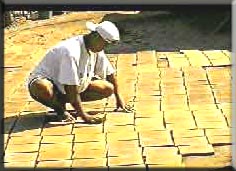
the various damili clay products, the Vigan Tiles.
The Vigan tile became much-sought in the late 70s and early 80s,
mostly due to the iconization of the Vigan ancestral house and of
anything resembling antiquity and “pedigree”. The Vigan
tile boom literally started when they were used by the Marcoses
(late 70s and early 80s) in restoring the Sarrat Church and in building
the Fort Ilocandia, both in Ilocos Norte, among others. Since then,
an increasing number of damili craftsmen spent most of their time
and skill making Vigan tiles to meet the seemingly-insatiable demand
for the product, that in fact, there are those who learned only
the tile-making trade, and not the making of traditional products.
The backyard production of terracotta Vigan tiles, bricks, pottery,
traditional stoves and well sidings is a must-see activity in the
picturesque setting of Bulala and neighboring barangays.
KATTOKKONG CRAFT
A status symbol in the olden days, the kattokong or gourd hat edged
with woven nito and fine bamboo slats continue to be handcrafted
in barangay Bongtolan.
|
|

