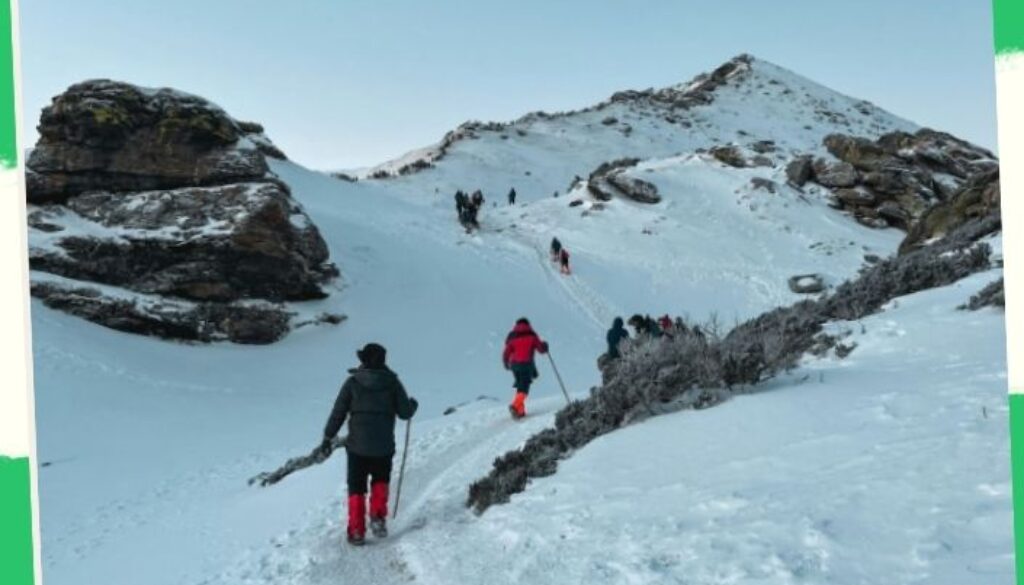
Kedarkantha Trek – The Most Popular Winter Trek in the Himalayas
The Kedarkantha Trek is a perfect Himalayan adventure, offering snow-covered trails, charming campsites, and breathtaking summit views. Known as the “Queen of Winter Treks.
Overview
The Kedarkantha Trek is undoubtedly one of the most sought-after winter treks in India. Present in the Sankri village, Utarkashi district of Uttarakhand, you get a lifetime chance to climb the Kedarkantha summit.
The trek lasts for about 6 days, including the drive, trekking days, and back to Dehradun. You cover about 23 kilometres of the trekking route. The Kedarkantha trek is relatively easier than other winter treks of Uttarakhand and even India, and is quite beginner-friendly. The difficulty gradient of the trek is easy to moderate.
For about 4-5 days, you come across the most beautiful natural wonders such as Juda ka Talab, Hargaon camp, and ultimately the Kedarkantha summit.
More than a trekking expedition, it is a soulful experience, giving you a healthy blend of adventure and insight into the Grahwali Himalayan life.
In this article, we have talked in detail about the itinerary of the Kedarkantha Trek, followed by Cliffhangers India. Take a look!
Brief itinerary of Kedarkantha Trek
Here is a brief 6-day itinerary for the Kedarkantha Trek:
Day 1: Dehradun to Sankri
Altitude: 1,950 m
Distance covered: 220 kilometres
Time taken: 10 hours
The drive from Dehradun is a scenic one, going through Mussoorie. The difficulty level of Kedarkantha trek is easy to moderate. The drive starts from the busy roads of Dehradun, but after some time, you are in the lap of a peaceful landscape.
The entire drive is filled with numerous gorgeous sights, such as those of forests filled with oaks, pines, rhododendron, etc. You will also spot a few apple orchards on your way to the base camp, Sankri.
While Dehradun is more of a city, as soon as you reach Sankri, you will be surrounded by the mountain life containing wooden houses, towering peaks, friendly locals, and shepherds.
If you reach there on time, you can explore around in the village and acclimatise property before going to the higher altitudes.
You will be staying in a guesthouse or homestay on the first day. Get a good night’s sleep, as you will be trekking continuously for the next few days.
Day 2: Sankri to Juda ka Talab
Altitude gained: 1,950 m to 2.773 m
Distance covered: 4 kilometres
Time taken: 5 hours
The second day contains gentle climbs of about 4-5 hours. The route to Juda ka Talab is filled with maple forests, meadows, and giggling streams.
After having a filling breakfast, you will start the trek from the base camp, Sankri, to Juda Ka Talab, a serene lake of Uttarakhand.
After covering about 4 kilometres, you will reach there by afternoon. The alpine lake is the first of many highlights of the Kedarkantha Trek.
It freezes completely in winter, looking very magical and a complete treat to the eyes. If you are trekking in summer, the high altitude is tucked in by lush meadows, and there are vibrant flowers bursting all around.
On the second day, trekkers stay in tents in proximity to the beautiful lake. It is a magical experience, spending the night under the starry sky in the peaceful ambience.
Day 3: Juda ka Talab to Kedarkantha Base
Altitude gained: 2,773 m to 3.413 m
Distance covered: 4 kilometres
Time taken: 3 hours
Day three is a transition day as you move from the calm of the lake to the excitement of the high mountains. It’s not too exhausting, but the scenery prepares you for the grand summit push on Day 4.
You’ll leave the Juda Ka Talab campsite after breakfast. The trail is gentle but steadily ascending, weaving through dense pine and oak forests. Soon, the thick forest begins to thin out, and you’ll notice open clearings where the sunlight breaks through. These meadows are breathtaking, especially if covered in snow.
As you climb higher, the forest opens up into wide clearings offering your first close-up views of Himalayan peaks. On a clear day, you’ll start seeing parts of Swargarohini, Bandarpoonch, Black Peak (Kalanag), and Ranglana. These views keep getting better as you approach the base camp.
The Kedarkantha Base Camp sits in a vast meadow surrounded by mountains.
In winter, everything is blanketed in snow, and the base camp looks like a giant white field under starry skies.
In spring & summer, the meadows turn green, dotted with wildflowers.
You can spot local shepherd huts, reminding you that these meadows are grazing grounds in warmer months.
At night, the sky turns crystal clear. The stars and Milky Way are visible, making it a perfect spot for stargazing and photography.
Day 4: Kedarkantha Base to Hargaon camp via Kedarkantha Peak
Altitude drop: 3,413 m to 2,700 m via Kedarkantha summit (3,810 m)
Distance covered: 6 kilometres
Time taken: 7 hours
Day four is the summit day of the trek. It is the hardest yet most exciting day of the entire expedition. Since it is going to be a long day, you start the trek early in the morning, even before the sun rises.
The trek on this day starts with a tough ascent from the base to the Kedarkantha peak. As you reach the top, at 12,500 metres, a panoramic view of the entire landscape awaits. You catch a glimpse of peaks like Swargarohini, Gangotri, and Yamunotri ranges, Bandarpooch, and even Har ki Dun valley.
The most pleasingly astonishing sight has to be that of the sunrise above the snowy peaks.
Once you have soaked in the view from the summit and spent some time there, it is time to descend to the Hargaon campsite, where you will spend the night.
Day 5: Hargaon Camp to Sankri
Altitude drop: 2,700 m to 1,950 m
Distance covered: 6 kilometres
Time taken: 4 hours
After breakfast at Hargaon campsite, you begin descending. The trail is well-marked and mostly through pine and oak forests. Unlike the steep climb on Day 2, this descent is gentler and more open. You pass by shepherd huts and small clearings, giving a glimpse of local mountain life.
As you approach Sankri, you’ll start seeing apple orchards and wheat fields, along with traditional wooden houses. The landscape changes from alpine forest to settled village life, marking your transition back.
By afternoon, you’ll reach Sankri village, the same base where your trek started.
Now it feels different, you return with the summit memory.
You stay in a guesthouse/homestay, enjoy warm food, and often a celebratory dinner with your trek group.
Evening is free, and you can explore Sankri, interact with locals, or just relax.
Day 6: Sankri to Dehradun (drive)
Distance covered: 220 kilometres
Time taken: complete day
After breakfast, you board your vehicle for the return journey. The road snakes through pine forests, valleys, and riversides. You’ll retrace the Tons River valley and cross Mori and Purola again. Around Mussoorie, you may stop for tea or snacks before descending into Dehradun.
By evening, you reach Dehradun, where you can continue your onward travel (train/flight).
The journey marks the closure of the trek, but the memories stay for life.
Kedarkantha Trek Package
The Kedarkantha Trek cost starts at ₹6,500 per person with Cliffhangers India. The price may vary depending on group size, season, and additional services. It ranges somewhere between 6,500 INR to 15,000 INR.
Cost Breakdown
Permits & Entry Fees: Around ₹500 per person (arranged by Cliffhangers India).
Transportation: Delhi → Dehradun (train/Volvo) → Sankri (shared taxi/jeep). Costs vary depending on vehicle type.
Accommodation: Included in the trek package (tents/homestays). Upgrades available at extra cost.
Meals: Veg meals included during the trek. Trekkers can carry snacks for energy boosts.
Guide/Porter: Included in the Cliffhangers India package for safety and support.
Inclusions
Transportation: Pickup and drop off from Dehradun or Haridwar to Sankri and back.
Accommodation: Comfortable tent stays with sleeping bags and mats.
Meals: Nutritious vegetarian meals during the trek, with variety ensured.
Trek Leader & Support Staff: Experienced guides for a safe and guided trekking experience.
Trekking Gear: All necessary equipment, including tents, sleeping bags, gaiters, crampons, and trekking poles.
First Aid: Basic medicines and first-aid support are available throughout the trek.
Exclusions
Lunch on the first day.
Personal expenses.
Anything not specifically mentioned in the inclusion list.

DisclaimerThe information is for educational purposes only and subject to change, and it is highly recommended to consult local authorities for the latest and most accurate updates. We do not constitute endorsement of any specific technologies or methodologies or endorse of any specific products or services.Work With UsWe’re always looking for new, exciting ways to collaborate with partners who share our enthusiasm for the Philippines. Work with us and explore exciting opportunities and join us in showcasing the Philippines to the world! |